Andrea: This year we are celebrating the 10th year anniversary of Scanzonati. It seems impossible that this project, that started from a simple idea that Stefano and I discussed over coffee (an Italian espresso of course!), has now developed into something really special. We realized that while we both were involved in several important musical projects, mainly based on Jazz or contemporary music, we were both missing a deeper artistic connection to our Italian roots, not only at a musical level but also at a cultural level.
Stefano: Building on that realization, for me the spark was also deeply personal and pedagogical. Andrea was not only a collaborator but one of my teachers at Berklee, someone who showed me that honoring tradition and pushing creative boundaries are not opposing forces. Scanzonati was born in that space of trust and curiosity, where mentorship evolved into artistic dialogue. We didn’t want to recreate Italian music nostalgically, but to re-inhabit it—bringing our lived experiences abroad, our jazz language, and our shared sense of play into the canzone. Over time, what started as a conversation over coffee became a way to reconcile who we were becoming as artists with where we came from, allowing our Italian identity to breathe, transform, and feel contemporary without losing its soul.
Andrea: Right from the beginning we wanted to create an environment where anybody involved would feel welcome, comfortable and inspired. Even though the band has featured many great musicians over the years, Stefano and I always wanted a very lighthearted and open space where creativity, joy of playing, and friendship would thrive. A group of musicians where everyone is a bit Scanzonato!
Stefano: Scanzonati comes from the Italian word scanzonato, meaning light-hearted, at ease, playful. It reflects the spirit of the project—music made with joy, freedom, and curiosity. We also play with the word as “S-canzonati,” meaning “without canzoni.” Living abroad and working mostly in jazz and contemporary music, we felt distant from our Italian songs. The project was born from the desire to reconnect with those canzoni, reimagining them through who we are today.
Andrea: It has been fascinating to realize right from the beginning how Stafano and I had very similar musical roots even if we grew up in different regions and following different musical paths. We were both inspired by Italian songwriters from the 70’s, 80’s and 90’s. Like any Italian song that came out of the folk and acoustic pop movement, we write outlining the joy, the luminosity, and solar energy of the Italian tradition, but occasionally with an underlying tone of melancholy and sadness. That’s where I believe that the spirit of Scanzonati perfectly captures what Italian music is about: a constant smile that hides a hint of melancholy, the “Sweet and Sour” of Italian culture. In this regard, the writing collaboration between Stafano and I is a perfect symbiosis. While Stefano brings out more joyous compositional characters, I tend to emphasize more the melancholic aspect of the italian musical tradition.
Stefano: Our main inspiration comes from the Italian canzone tradition, where melody, language, and storytelling are inseparable. We draw from the lyrical depth and natural singability of Italian, and from a culture that values human warmth, irony, and shared experience—music meant to live around a table as much as on a stage. Equally important are our Mediterranean roots. Italy’s geographic position as a historic harbor has made it a place of constant cultural cross-pollination, with many civilizations leaving lasting traces. This openness shapes our sense of melody and expression and, combined with our backgrounds in jazz and improvisation, allows tradition to stay alive while evolving into a contemporary dialogue.
Andrea: I grew up listening to a variety of styles and songwriters. Some of the more influential figures for me were icons such as Fabrizio De Andre’, Francesco De Gregori, Angelo Branduardi, Edoardo Bennato, Pino Daniele, and Ivano Fossati, just to mention a few. At the same time I was studying and playing a lot of Jazz. Chet Baker, Bill Evans, Keith Jarrett, Path Metheny, have been huge influences in my playing and writing. I believe that this dichotomy, between the Italian and the Jazz traditions has played a crucial role in shaping my writing and playing style. My songs have strong Jazz elements, while my lines and solos tend to constantly borrow from the melodic tradition of Italian music.
Stefano: Our Italian musical background deeply shapes the way we write and play. Growing up with the canzone tradition means that melody and storytelling always come first—the music is guided by the voice, the text, and the emotional arc of the song. There is a natural attention to phrasing, lyricism, and expressiveness that comes directly from the Italian language itself. At the same time, our Mediterranean upbringing brings a sense of openness, flexibility, and human warmth into the music. These elements blend with our jazz and improvisational training, influencing how we shape harmony, interact as an ensemble, and leave space for spontaneity—allowing the music to feel both rooted and alive in the moment.
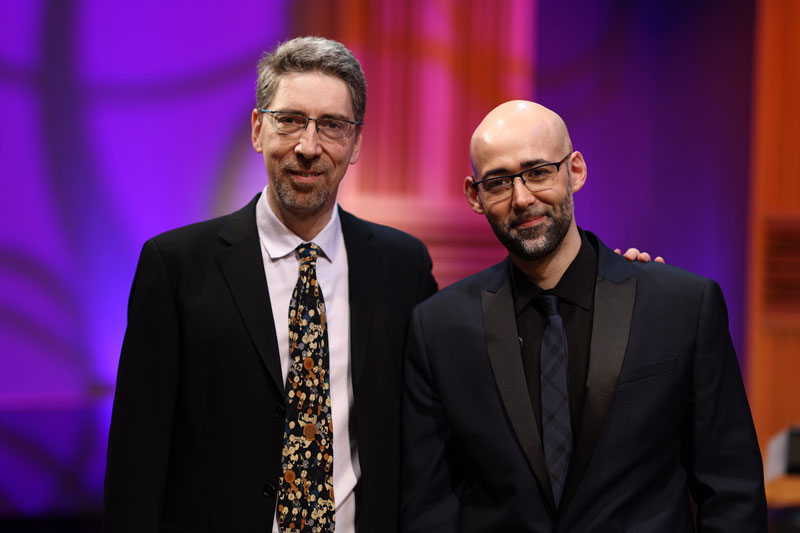
Andrea Pejrolo, Stefano Marchese
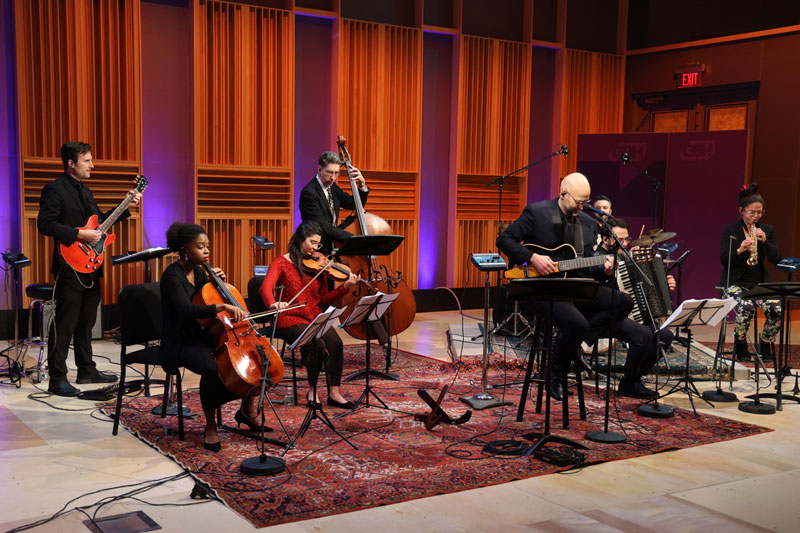
Andrea: The fundamental philosophy of Scanzonati is based on collaboration, and cultural exchange. This project is allowing us to constantly look for new artists, along with new ideas, and trends to share with our audience. This constant search for new inspirations has allowed us to keep a strong connection with our musical tradition, and with several artists that we like to collaborate with on a regular basis. The Scanzonati band has evolved and has expanded during the years, and now it features some incredible musicians that play an important role in shaping our sound.
Stefano: Living abroad has made our connection to our roots more intentional. We keep it alive by writing and performing in Italian, reimagining the canzone tradition, and staying in close contact with Italian musicians and colleagues through ongoing collaborations both here in the States and in Italy. On a personal level, being exposed to many cultures in the U.S. led me to rediscover my origins in an unexpected way: at one point, I realized that in my dreams the language spoken was neither English nor Italian, but the dialect of Abruzzo, my region of origin. At the same time, Scanzonati has always been an international project. From the beginning, we welcomed musicians from different parts of the world, and the band became a space for cultural exchange—one that has enriched everyone involved since 2016.
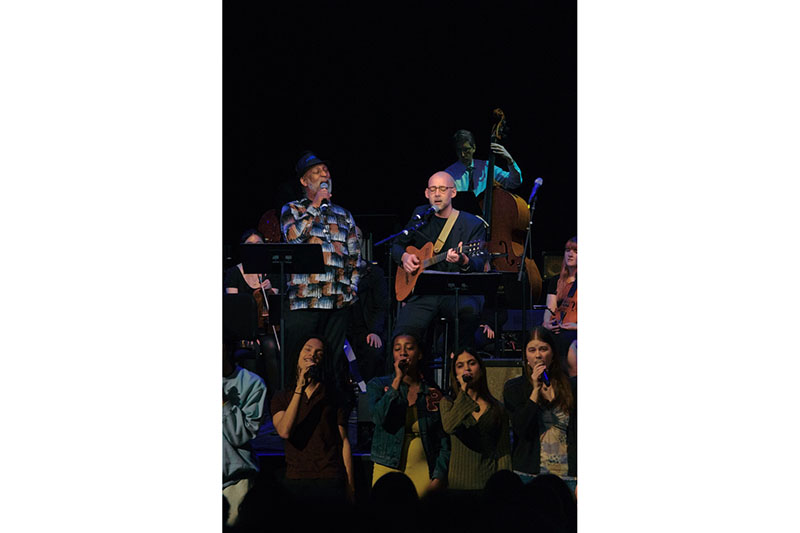
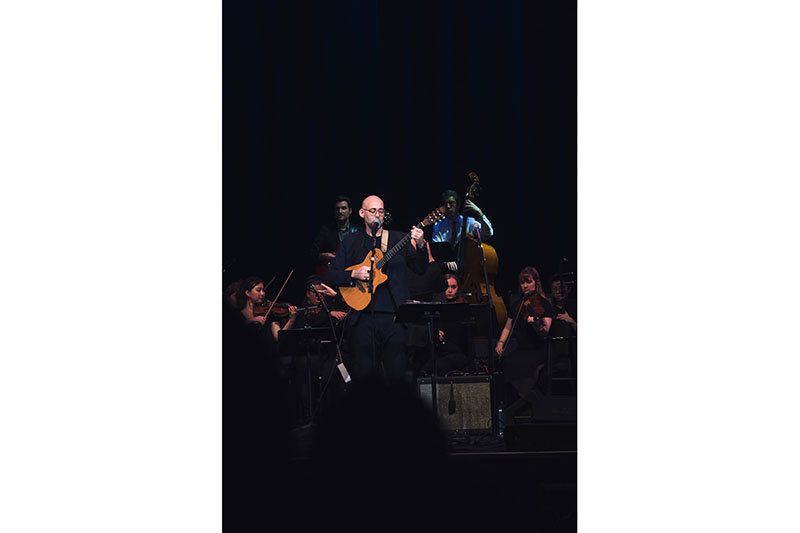
Stefano & Andrea: Some of the most exciting moments have come from collaborations that truly reflect who we are artistically. Over the years, we’ve had the honor of working with iconic figures such as Mogol and Carmen Consoli, experiences that deeply influenced our approach to songwriting and performance. More recently, a particularly meaningful highlight was our concert at the Berklee Performance Center, in collaboration with the Berklee World Strings directed by Eugene Friesen. Bringing Scanzonati’s music together with a global string ensemble felt like a natural extension of the project’s spirit—rooted in Italian song, yet open to international dialogue and new sonic landscapes.
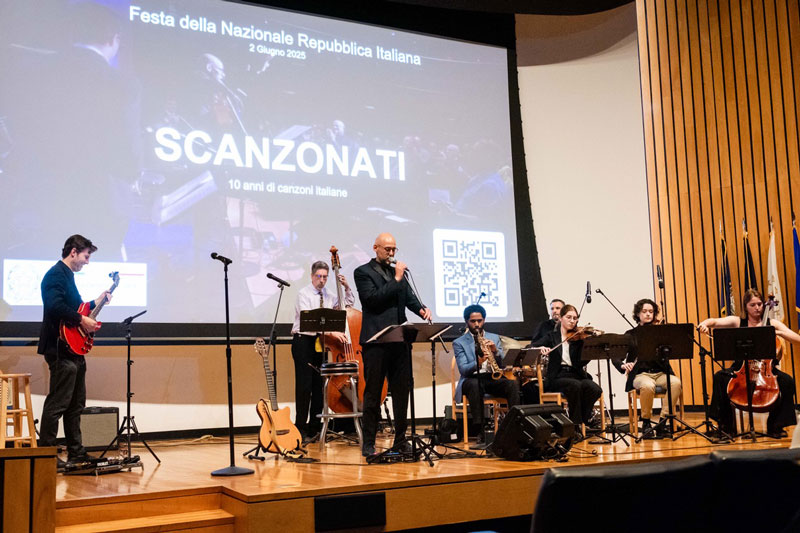
Stefano & Andrea: In the first two years, Scanzonati focused mainly on re-arranging some of the most iconic Italian canzoni. Writing original music was not part of the initial plan, even though probably secretly we had an urge to write original material. That changed through very personal encounters with some of the greatest Italian songwriters. Meeting Mogol was a turning point. We still vividly remember sitting in my living room, nervously and excitedly presenting our first original songs to him. His encouragement gave us the confidence to take that step. A similar spark came later through our collaboration with Carmen Consoli. At one point, she told us that a song is written from the need to say something. That simple sentence stayed with us. So we asked ourselves: Do we have that need? The answer was yes—we had many stories to tell. That realization marked a shift in Scanzonati’s journey, moving us from reinterpretation to original songwriting while remaining deeply rooted in the spirit of the Italian canzone.
Andrea: We never stop looking for new inspirations, new ideas, and new collaborations. I think that this is what makes Scanzonati such a fresh and exciting project. Pretty much in every major concert we have featured new guest artists that have added a new layer of originality, and uniqueness to our sounds. This is something that we want to keep exploring, expanding the band, and looking for new sonorities. After having performed with the Berklee World Strings ensemble, we are looking forward to more collaborations with larger ensembles. We are also eager to include more instruments and artists from all over the World, in order to create a global sounds that unites different traditions and cultures.
Stefano: Scanzonati is heading toward new adventures, new stories, and lots of new music. We’re writing more original tunes, letting the project grow organically, and continuing to mix Italian canzone, Mediterranean colors, and international influences—always with a sense of play. There are new recordings, exciting live shows, and fresh collaborations on the horizon. But before all that… we’ll probably need another espresso, sit down together, and let the next canzone come naturally—just like it did at the very beginning.
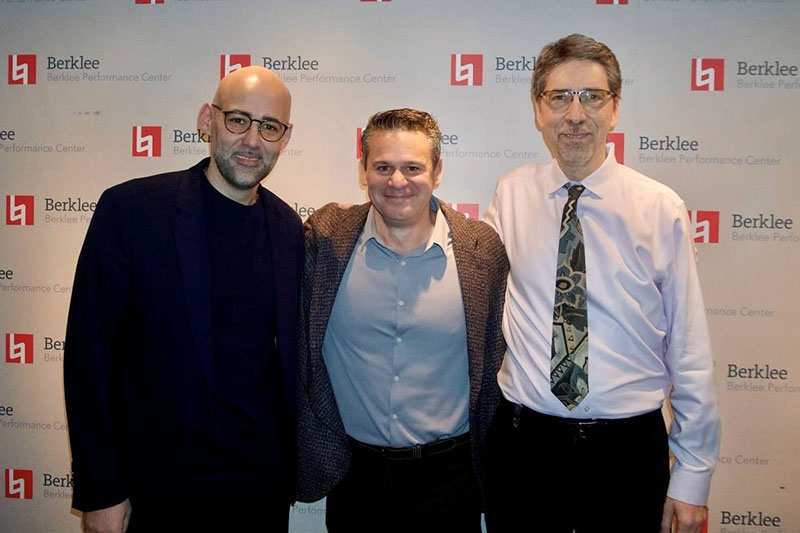
Stefano Marchese, Berklee President Jim Lucchese, Andrea Pejrolo
– https://youtu.be/jfn7LdLXE4o
– https://youtu.be/asOkSdZwfaE
– https://youtu.be/vubdRLI3HJo
– https://youtu.be/s5qeFTVEp-g
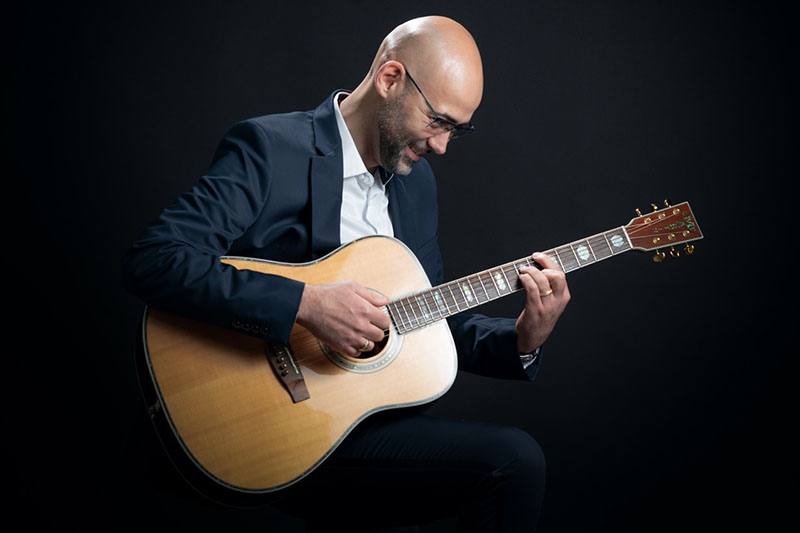
Stefano Marchese
– https://music.apple.com/us/album/scanzonati/1652482247
– https://open.spotify.com/album/1If5ai03QBZub3bayIOiA5?si=4IHsb4E4QDej874VcV9yWg
– https://www.musicajazz.it/intervista-andrea-pejrolo-stefano-marchese-scanzonati/
– https://jazzaroma.wordpress.com/2022/11/26/da-boston-arriva-lalbum-scanzonati-degli-artisti-italiani-stefano-marchese-e-andrea-pejrolo-che-promuovono-la-nostra-lingua-e-la-nostra-cultura-negli-states/
– https://jazzaroma.wordpress.com/2022/11/15/a-boston-esce-il-primo-singolo-quelli-come-noi-dellalbum-scanzonati-di-stefano-marchese-e-andrea-pejrolo/
– https://www.jazzinfamily.com/scanzonati-marchese-pejrolo/
– https://www.radiolaquila1.it/2022/11/23/stefano-marchese-con-andrea-pejrolo-ambasciatori-musica-italiana-in-america/
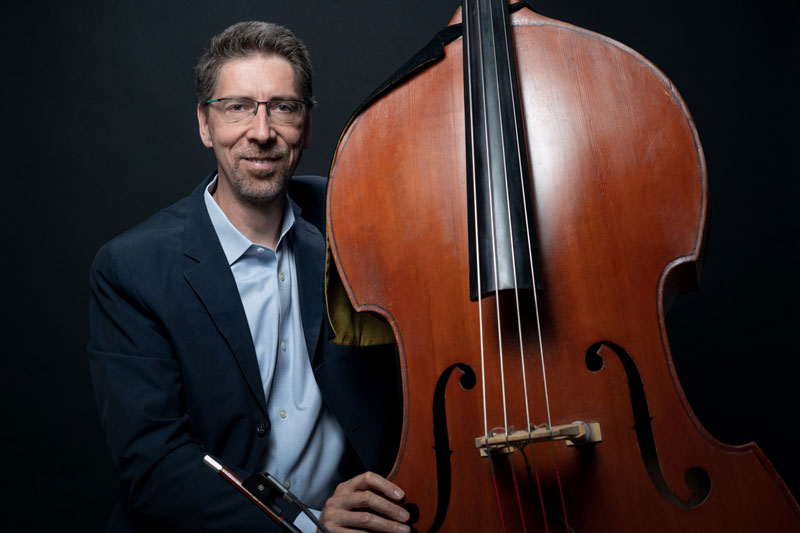 Andrea Pejrolo is currently a Professor (and former Chair) in the Contemporary Writing and Production Department at the world-renowned Berklee College of Music.
He is a national and international composer, producer, arranger, bassist, and music educator in Boston, Massachusetts.
He holds a Ph.D. in jazz studies from New York University, a Master’s in Composition for Film, TV, Theater, and Multimedia from the University of Bristol (U.K.), and a Music Diploma in Jazz Performance from Manhattan School of Music in New York City. Andrea is currently a member of the Board of Trustees and the Chair of the Technology Committee at the Winchester Community Music School.
Some of his collaborations and projects include Scanzonati, Sounds of Italy, Lou Salloum and Jamie Helou (Lebanon, Beirut), Kukaio Film Production (Munich, Germany), Traits de Marque in Paris, iAcoustica Studio drum library, iDrum Rock Edition for iPhone/iPad in collaboration with Izotope, arrangements and recording with the City of Prague Philharmonic Orchestra, Don Sebesky, ABC, CBS, Cy Coleman, Burning Petals Music Production (U.K.), the Broadway Show “Swing” (St. James Theater, NYC), and the Grand Canyon Music Festival.
His most recent album releases include “A Place for You to Call Home”, and “The Legend of Ramu Setu Bridge”, available on all streaming platforms.
Andrea is also the author of various books, articles, and essays on the subject of music technology and jazz analysis. His most recent publications include: “Creating Sounds from Scratch” for Oxford University Press (http://a.co/8JuPJ78), and “Acoustic and MIDI Orchestration for the Contemporary Composer” for Focal Press (http://a.co/aLBw63e).
Featured videos:
You Tube
Related Links:
Berklee On Line
Publications:
Creating Sounds from Scratch
Acoustic and MIDI Orchestration for the Contemporary Composer
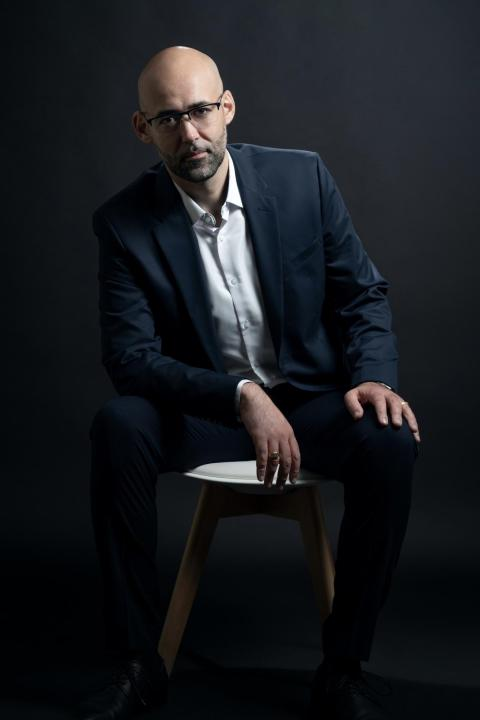 Stefano Marchese is an award-winning Italian singer-songwriter and educator. He has collaborated with Grammy winners Bobby McFerrin and Luis Enrique, among others. Thanks to his solo album Radici, in 2021 he was nominated by Serafini as one of the 100 most relevant Abruzzesi abroad.
Band leader of Scanzonati, alongside bassist and Berklee faculty member Andrea Pejrolo, Marchese has collaborated with iconic figures of Italian musica leggera such as Mogol and Carmen Consoli. A radio and television host and producer, his show L’Italia chiamò aired on more than 40 TV channels across Italy and Europe and featured distinguished guests including Oscar-winning composer Nicola Piovani and renowned Italian jazz and pop artists such as Chiara Civello, Zucchero, Levante, Dardust, and GeGé Telesforo.
Marchese is President of MEMECO – Mediterranean Music Education Committee, an international initiative dedicated to fostering dialogue, research, and collaboration in music education across the Mediterranean region and beyond.
A faculty member at Berklee College of Music and a teaching artist at the Eliot School in Boston, he has presented at national and international music education conferences and published in leading journals on culturally and linguistically responsive teaching and technology in music education. As an artistic director, he curates several series and festivals in New England, including Jazz in the Park, Sounds of Italy, and Piazza All’Aperto, among others.
In 2024, he received the NEMPAC Impact Award in recognition of the impact of his work on the Boston community in the fields of music and music education.