
His gaze was unfocused, and he completely ignored those around him–(hit the dash button twice and close the space on each side) just a few days earlier, he had heard that the college entrance exams had been canceled. While he was still in shock over this news, he was told he needed to go to the countryside to receive “education” from local farmers. Suddenly, his future seemed uncertain. Pulling himself back to reality, he glanced around. There were many young people like him nearby, their faces lost and quiet, while their families stood beside them, offering words of support.
At the platform, Wangbin’s mother stood beside him. She didn’t understand what had happened; she simply believed her son was responding to the government’s call to go where he was needed. She urged Wangbin anxiously, “Hurry up, son. The train is about to leave. Work hard to serve our homeland, come back early for the New Year.” Wangbin looked at her for a while, nodded, and then took a slow step, then another. With another whistle, the train doors slowly closed, and his view was blocked by the flow of people.
The train ride north seemed endless. Wooden seats shook beneath tired bodies. Ice gathered at the corners of the windows. Some young passengers talked loudly to hide their fear, while others sat in silence. Wang Bin opened one of his notebooks, but the lines of writing blurred before his eyes. Outside the window, the city faded into open fields, frozen rivers, and villages of dark roofs covered in snow. Every mile seemed to carry him farther from the life he had known. He turned to look inside the cabin. The person next to him was holding a newspaper, the front-page headline of it reporting precisely what he was experiencing.
A momentous event occurred in China in 1968. The great Chinese leader, Mao Zedong, launched a movement known as the Cultural Revolution to secure his position. During this period, China’s college entrance exams were abolished, and nearly all students in high school, and above, suddenly lost the opportunity to continue their education. The government mobilized educated youth to leave the cities and go to the countryside and remote areas to work and receive “re-education” from the “poor peasants and farmers.” The great majority of them never had the chance to return to their hometowns for the rest of their lives.
When Wang Bin finally arrived in the rural village in Northeast China, the wind struck him first—sharp, dry, and cruel. Then came the sight of the place itself. Low houses leaned crookedly against the weather. Roofs were patched with straw. Smoke rose from chimneys in thin gray lines. The roads were little more than frozen dirt paths marked by wagon tracks. Chickens scratched near doors, and dogs barked behind fences made of uneven branches.
Villagers stared openly at the new arrivals. Their speech was thick with local words, so different from the language of the city, that Wang Bin could barely understand half of what was said. Their words sounded rough, direct, and fast. He had never been in a place so poor or so strange.
That same afternoon, the village chief gathered the sent-down youths in an open yard. He was a broad-shouldered man in a padded coat, his face red from cold and wind. He criticized them for being soft city children who knew nothing of real life.
“Here,” he said, “books will not feed anyone. Instead, they would learn through labor. They would obey the rules of the village, work hard, and stop dreaming of easy futures.” Wang Bin lowered his head and said nothing. The chief’s words hurt him, but he knew arguing would only bring more trouble.
A few days later, he was sent to the coal mine; the village chief had said it was a good place to toughen one up. Before dawn, he followed the miners across snow-covered fields toward a pitch-black opening in the earth. The shaft swallowed them up one by one. Underground, though it was winter outside, the tunnels were narrow, dark, and stifling. Water dripped from the ceiling. The air was thick with the smell of coal smoke and sweat. The light from the miner’s lamps cast faint, flickering circles on the walls. The miners worked at a steady pace, their tools striking the rock with a crisp clang. Wang Bin tried to keep up with them, but his arms soon began to tremble with exhaustion. Sweat ran into his eyes. His breathing grew heavy.
Finally, dizzy and exhausted, he collapsed to the ground. For a moment the miners laughed. Then one older man bent beside him and handed him water.
“What a scholar’s hands,” he said, looking at Wang Bin’s blistered palms. They helped him sit up and told him to breathe slowly.
“You will get used to this,” the old man continued earnestly, “we will help you get through.” Wang Bin felt ashamed but touched by his heart. He also understood something important: the body could grow stronger, but the mind must not be lost.
During breaks, he noticed the miners gathering in corners of the tunnel. Some smoked. Some played cards. Others simply sat with eyes closed under the dim glow of oil lamps. The lamps interested him. Their small flames fought bravely against the great darkness. One evening he brought a book underground. Borrowing a lamp, he leaned against the rough wall and began to read. Coal dust settled on the page. The light moved whenever someone passed. Yet line by line, he studied. Soon it became a habit. Whenever work paused, he opened math notes, memorized passages, and solved problems in his head.
At first, the miners were surprised when they saw this, and they would tease him for wasting his rest time. However, day after day, they saw that Wang Bin never stopped studying even during his breaks, so the miners began to admire his hard work and perseverance, and gradually started to respect him.
As time passed, they gradually realized the differences between themselves and Wangbin. They knew he was not made for mining, and some quietly gave him lighter tasks. Others asked him to read letters from family or explain news from the city. In return, they shared food, stories, and silence. Under the earth, among men whose lives had rarely touched classrooms, Wang Bin learned another kind of education: endurance, kindness, and pride in hardship.
Five years passed. He was finally allowed to teach village children when local policies began to value schooling again. In a cold room with broken windows, he wrote words and numbers on a rough board while children in patched coats watched with bright eyes. Around that time, villagers introduced him to a young woman. She was practical, warm-hearted, and stronger than he was in many ways.
The wedding was a simple affair, with just a modest meal and the sound of firecrackers to celebrate. And when the ceremony began, many villagers came running over to congratulate him. Most of them were workers who had once mined with him. Soon after their wedding, their daughter was born.
Life after marriage wasn’t as pleasant as imagined, the living conditions remained difficult. One winter night, Wang Bin held his daughter in his arms, listened to the wind shake the door and made a silent promise: she would not spend her life trapped by poverty and lack of education. That promise became his fuel. After long days of work and teaching, he studied beneath a kerosene lamp. The lamp glass darkened with smoke. The smell of fuel filled the room. His wife often woke in the night to find him still reading, his head bent over old notes.
Then, in the tenth year of his stay, a rumor spread across the village like fire through dry grass: the college entrance examination might return. At first, Wang Bin did not believe it. Too many hopes had already ended in disappointment. But when the news was confirmed, he stood speechless. Then tears came to his eyes. Ten years of waiting. Ten years of reading in mines, classrooms where he taught, and in darkened rooms. So many times he wanted to give up because he couldn’t see the light at the end, but now, he finally saw it.
He prepared with strong focus. While others hurried to review forgotten lessons, he opened notebooks already worn soft at the edges. On the day of the exam, he entered the room with excitement and shaking nerves. Younger students around him looked worried. When he opened the paper, however, a kind of calmness filled him. Question after question felt familiar. His pen moved steadily. Each answer seemed to gather strength from every page he had studied in the darkness.
When the exam results were announced, Wang Bin went to the notice board at the center of the village with his wife and daughter. He was anxious and couldn’t bring himself to look, but when his wife excitedly hugged him, he finally found out the results. He scored high enough to enter one of China’s finest universities. Later, he chose computer science, one of the newest fields in the country, and eventually became a professor.
Years afterward, whenever professor Wang stood before students in a bright classroom, chalk in hand, he would sometimes remember the coal mine, the kerosene lamp, and the green train at the station. He had once believed that trains carried him away from his future. In truth, it had carried him toward it.
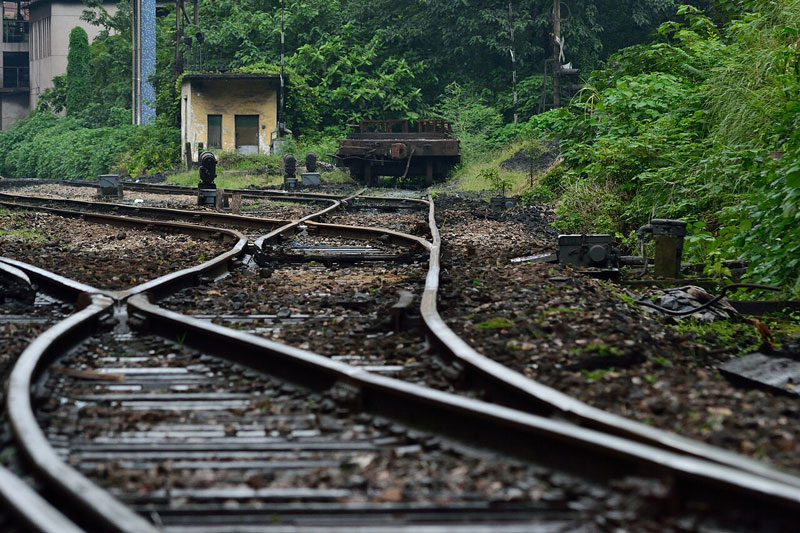
Ginwai Tam, “Train in China DSC 6942” CC BY 2.0, via Wikimedia Commons